Innovations in Structural Strengthening – Cast Iron and Steel Structures using UHM Carbon Fibre Plates

Interest in strengthening metallic structures was first led by the off shore industry. The civil engineering industry soon realised the opportunity for its use and major bridge owners such as London Underground Limited and Network Rail expressed interest.

In 1996 a DETR/PiT program was set up to develop the use of composite materials in strengthening metallic structures. Detailed areas for investigation included design, specification, materials performance and installation best practise. The main output from this program was the Institution of Civil Engineers design and practise guide ‘ FRP Composites Life Extension and Strengthening of Metallic Structures’, which was published in 2001.

Both cast iron and steel structures have been strengthened with bonded composite plates. Wrought iron is also a material being considered for strengthening.

Another major part of the DETR/PiT program was to carry out full-scale validation of the technique. A London Underground Ltd bridge called D65A was selected for this trial. The bridge consisted of 3 main longitudinal beams with transverse beams spanning between them. Two of the transverse beams were selected for the trial. A target of a reduction in peak strains in the beams of 25% was chosen and designed for. A known load was pasted over the bridge both before and after strengthening and a reduction of peak strains of 23% was recorded. The discrepancy between the target and the actual reduction in strain was investigated and found to be due to the stiffened beams attracting additional load from other parts of the structure.

The plates for strengthening metallic structures are generally considerably larger than those used for strengthening reinforced concrete. The requirement for increased stiffness of the strengthened element means larger cross section areas are required and the fibres used within the plates, although still carbon, have a higher stiffness than those used for strengthening reinforced concrete. These requirements mean that plates are generally manufactured to the exact dimensions and properties required for the project, making them bespoke plates.

To provide plates that have a high level of control of fibre alignment, and hence final plate properties, a pre-preg method of manufacturing is adopted. This involves unidirectional fibres being pre-impregnated with an epoxy resin to form a sheet. These sheets are then laid up individually in the required direction and a vacuum used to consolidate the layers and obtain the maximum fibre fraction content. The whole component is then cured in an autoclave. This method of production also allows tapers to be built into the plate, reducing the thickness at the end of the plates to approximately 1mm and in turn reducing forces on the bond line.

The finished plates are then delivered to site flat in a similar way to steel plates. However, they are considerably lighter than the equivalent steel plate. The substrate needs to be prepared to remove all contamination and corrosion products and provide the maximum levels of adhesion of the adhesive. Although the plates are lighter than steel plates they are too heavy for the adhesive to hold in place whilst still curing. Temporary supports are required to maintain pressure between the plate and the substrate while curing takes place. Once cured a final protective coating is applied over the plate and on to the metallic substrate to prevent corrosion of the substrate.

In 2002 the LUL bridge MR46A was strengthened using the Sika CarboDur DML System. The bridge is a single 28m span bridge consisting of mild steel main and transverse beams. Strengthening was required for the bridge to carry the full LUL load requirements. Various Sika CarboDur UHM plates up to 13m in length, 30mm thick and 250mm wide were installed.

In more recent times production of plates using aramid fibres has been carried out. The aramid fibre is less conductive than carbon fibres and this is believed to be beneficial in reducing induction forces when strengthening bridges over high voltage cable, a common situation on electrified railways.
Development of Structural Strengthening – Pultruded Carbon Fibre Plates (CFRP)

The development and use of alternative materials has been a constant process almost since the first use of steel. The installation problems associated with the weight of the steel plates and the potential for corrosion to reduce the durability of the system led to composite materials being considered. In the early 90’s much of the research was carried out at EMPA in Switzerland. In the UK a Dti Link project called ROBUST was established to investigate the use of composite materials for strengthening structures. In 2000 the Concrete Society launched Technical Report 55 ‘Design Guidance for strengthening concrete structures using fibre composite materials’.

The first UK strengthening scheme using composite materials was completed in 1996 at Kings Collage Hospital in London. The addition of a new floor to a building changed the loading requirements of the existing roof to new floor loadings. 1.3Km of Sika CarboDur plates were installed to the soffit of the longitudinal ribs under the slab.

Preparation of the concrete surface for either steel or composite plate bonding is identical. The composite plate is delivered to site in a roll with a diameter of approximately 1.5m. The lightweight nature of the composite material means a roll containing 250m can be easily lifted and moved by a single operative. The roll is cut on site to give the required plate lengths.

The plates are applied to the concrete surface using a similar adhesive to the one used for steel plate bonding. The initial grab of the adhesive is enough to hold the lightweight plate in place during the full cure period of the adhesive, eliminating the requirement for temporary works.

The composite plates are 1.2-1.4mm thick. This means that any residual longitudinal forces in the end of the plate have a much smaller eccentricity to the concrete surface compared to steel plates. In turn this means that peeling forces are lower which generally removes the requirement for anti peel bolts.

As composite materials do not corrode, corrosion protection systems are not required. A decorative coating can be applied to help conceal the strengthening.

Development of Structural Strengthening – Steel Plate Bonding

Steel plate bonding has been used in both buildings and civil structures in the UK since 1975 using first generation epoxy adheives. In 1994 the Highways Agency published BA 30/94 ‘Strengthening of Concrete Highway Structures Using Externally Bonded Plates’. This provided information on application, design and specification of the technique. The application of steel plates is still the best solution to some strengthening problems that occur today.

Steel plate bonding provided the basis for the establishment of strengthening using externally bonded reinforcement. The process involves the bonding of a mild steel plate with a minimum thickness of 4mm (for handling purposes) to a prepared concrete surface.

The steel plates are fabricated off site to the required dimensions and specification, including holes for anti-peel bolts.

To prevent any corrosion of the steel plate a primer system needs to be applied to the prepared steel surface during fabrication. This primer also provides the critical function of transferring forces from the structure to the steel plate and is hence a crucial part of the system.

Holes for anti-peel bolts also need to be inserted in the steel plate during fabrication. These bolts are required to provide additional resistance to peel forces applied to the bond line due to any residual force in the end of the plate. The bolts have to be positioned carefully to avoid damage to the existing reinforcement in the concrete surface.

Temporary works are required to support the heavy steel plates while the 2-part epoxy adhesive is curing. The curing period is dependant on ambient conditions but is likely to be a minimum of 3 days.

A fillet of adhesive is generally placed around the edge of the plate, this provides additional protection to the bond line but also allows the application of the final corrosion protection system to the steel plates to be lapped out onto the concrete surface. The corrosion protection system is likely to provide a life to first maintenance of 8 years and to major maintenance of 16 years in an exposed environment. However, the first project carried out in 1975 has only recently come to the end of its service life over 35 years after its first installation.  Whilst the limited exposure conditons that these plates were exposed to may have extended the life span, current understanding of the performance of corrosion primers and adhesives could have possibily extended the life span.

Interestingly the steel plates have been replaced with a Carbon Fibre (CFRP) plate bonding solution.

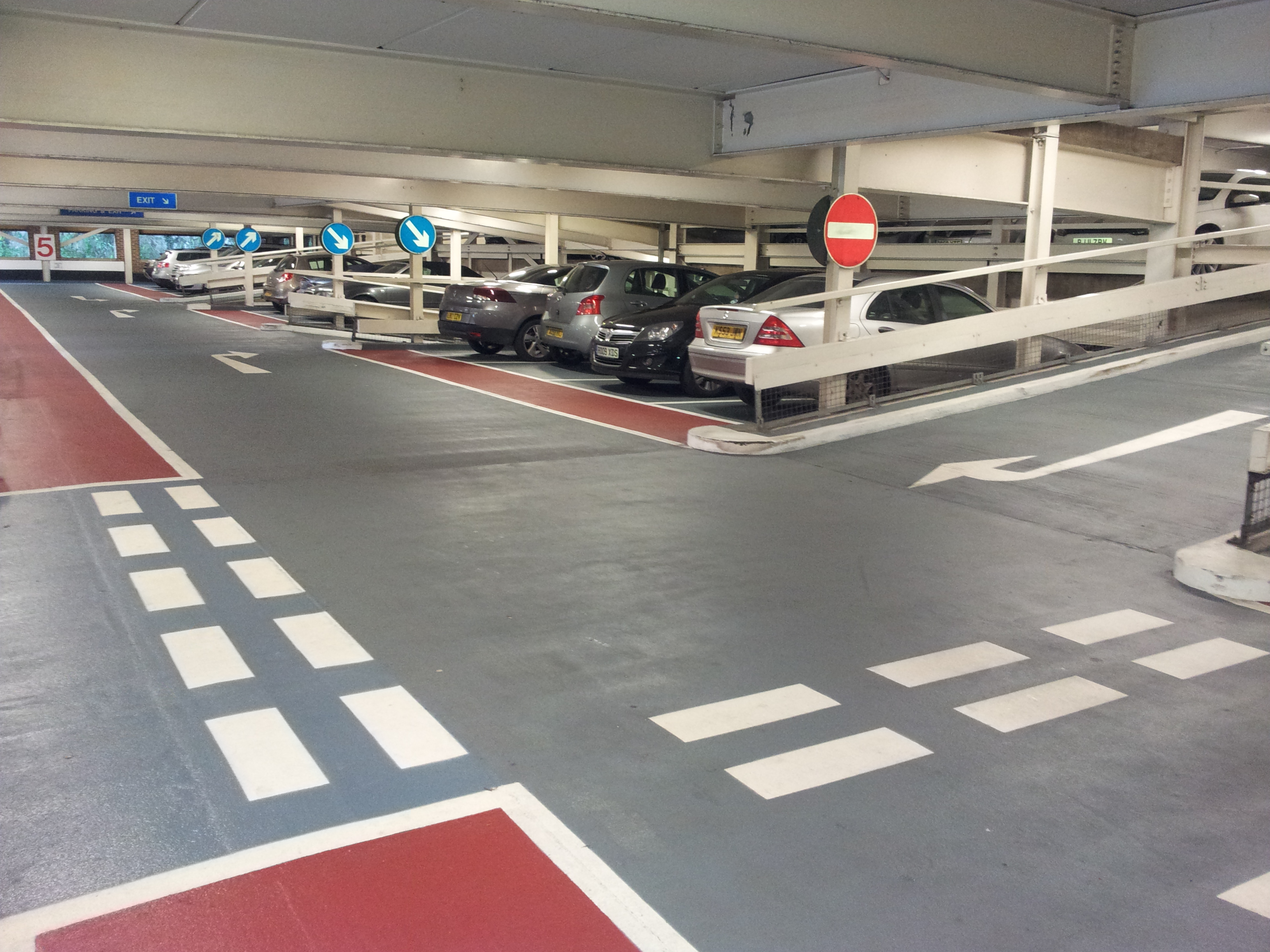
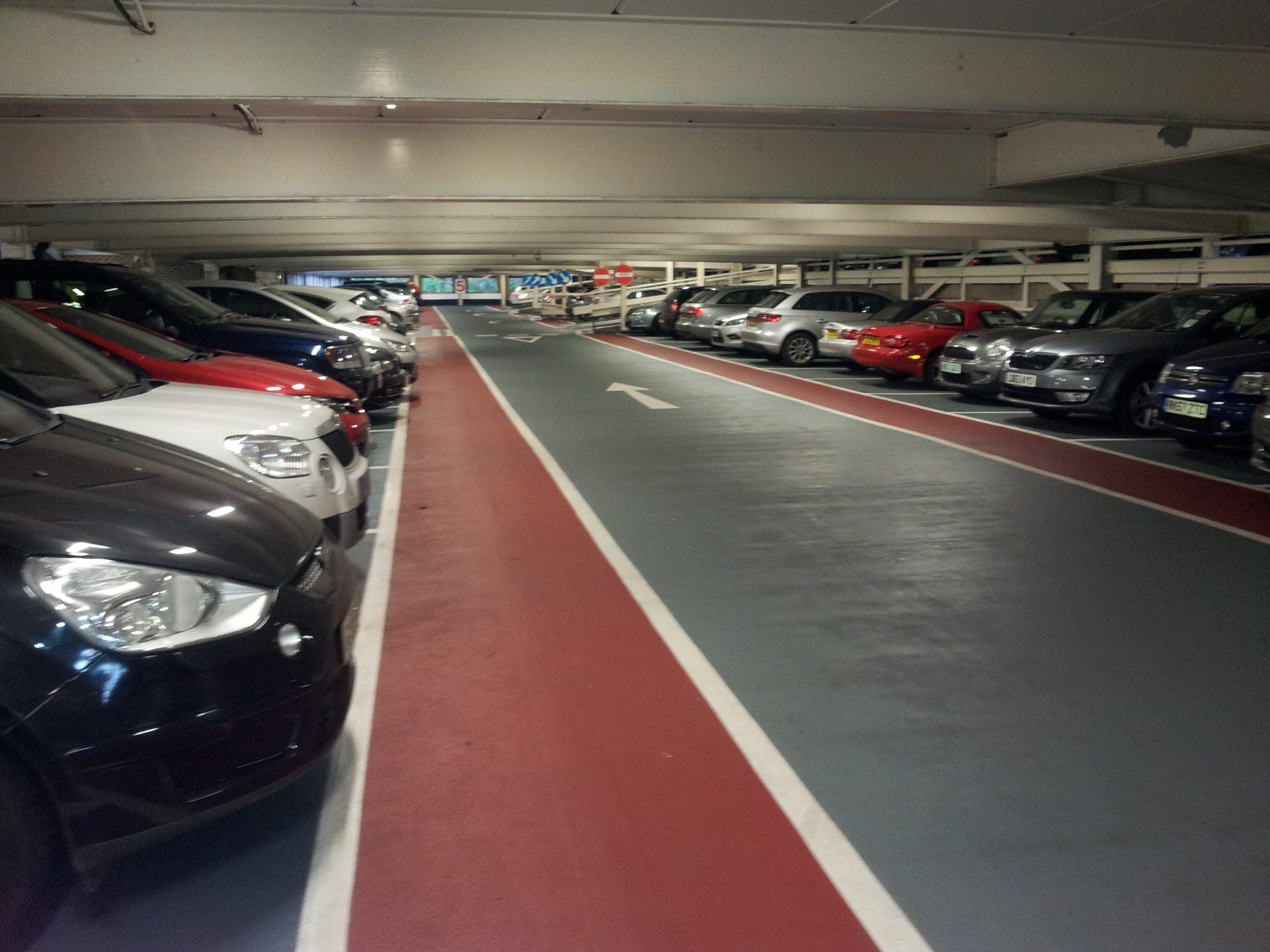
Car Park Refurbishment

The careful selection of car park decking systems means the right blend of waterproofing, traffic resistance and practical application constrants can be considered to give a long term durable, aesthetic solution which minimises disruption to the users of the car park and maximises revenues for the client, both during the refurbishment and in the long term, by improving the environment for the user.

The decking can be used as part of a long term strategy to protect the structure from degredation along with other possible techniques such as concrete repair, decorative protective concrete soffit coatings, steel corrosion protection systems, corrosion inhibitors, sacraficial anodes and cathodic protection, all in accordance with the Life Care Plan approach suggested in the ICE Document ‘Recommendations for the inspection, maintenance and management of car park structures’ and the management strategies outlined in BS EN1504.

Car Park Waterproofing
Car Park Decking
Car Park Decking

The Development of Composite Materials for Strengthening Structures – Introduction

The technique of flexural strengthening of reinforced concrete structures using externally bonded composite reinforcement has been in use since the mid 1990’s.   The method of strengthening by bonding steel plate, which had been used in the UK since 1975, has now generally been replaced by the use of composite plates.

The increased acceptance of the method has led to different types of structure and problems being considered for strengthening using composite materials. The flexural capacity of metallic structures such as cast iron and steel can be improved. The resistance of reinforced concrete or masonry against impact, blast and seismic loads can be increased. Reinforced concrete structures deficient in shear can be strengthened. The use of pre-stressed composite plates can relieved both dead and live loads at the same time as overcoming difficult detailing problems.

The success of any new techniques depends on detailed research and development and the long term durability of all the materials used in the strengthening system. The other main system components that should be included in this development are the adhesives used to bond the composite to the structure.

What are the practical benefits of strengthening using carbon fibre plates?

Thanks to the light weight and low profile materials, carbon fibre plates have the practical benefits of;

  • Reducing the visual impact of strengthening.
  • Acceleration of project times.
  • Resolving difficult access issues.
  • Minimising the disruption to existing services.
  • resolving difficult detailing problems.

What can be achieved by strengthening structures using CFRP plate bonding?

Structural strengthening using carbon fibre plates bonded to reinforced concrete can;

  • Increased flexural strength
  • Redistribute loads around openings
  • Improve shear/punching shear resistance
  • Increase impact resistance
  • Increase load carrying capacity of structure

Structural Strengthening – Carbon Fibre Plate Bonding

Why do structures need strengthening?

Change of use giving an increased loading
Inadequate design
Poor quality construction
Structural damage
Fire damage
Seismic Loading
Reinforcement Corrosion (If cause treated)
Loss of prestress force

Technical Sales Strategy – Construction Products

Selling technical products, profitably, within the construction industry invariably means selling to specifiers such as architects, civil engineers, structural engineers and client teams, especially if they are new innovative products. All of these specifiers will have spent many years becoming qualified and will be educated to degree level. All most all of these technical professionals will be looking for technical support from sales people and won’t be comfortable seeing a ‘sales’ person. They will constantly be judging the technical knowledge of the sales person based on the knowledge they have of the product, the understanding of the relevant standards relating to the application and the technical language that they use. They are unlikely to give any sales presentation credibility if they have judged the sales person as not being technically knowledgable.

Any successful technical sales strategy needs several elements to be considered;

Product positioning is important, is it a product which has a technical differentiation to anything else in the market place? If there isn’t, is it a commodity product which needs a different sales strategy?

What sort of sales team will you need? Do you employ people with technical knowledge, but limited or no sales experience, or do you train sales people technically concerning everything associated with the product?

Technical sales tools such as CPD presentations, white papers, Specification Clauses, standard details will all help sales people demonstrate there technical capability and are a necessity in any strategy.

Structural Strengthening

UHM Carbon Fibre Plate Bonding

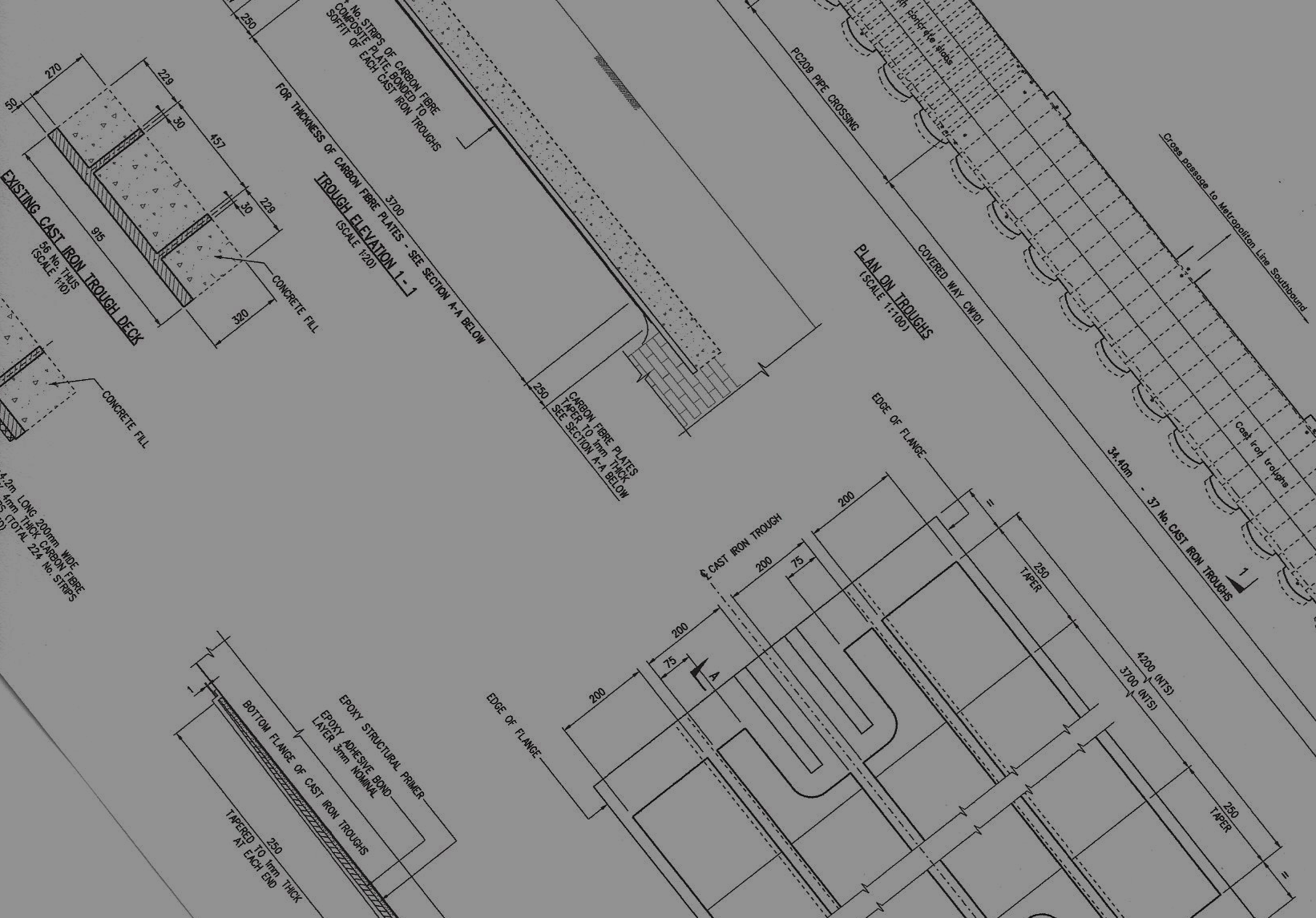
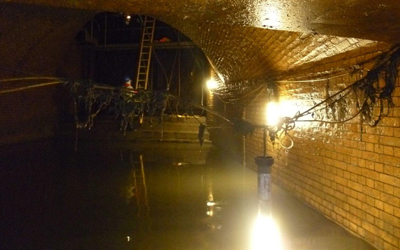
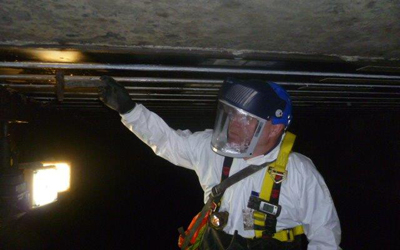
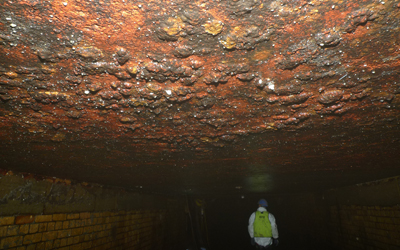
This is one of the most technically demanding structural strengthening projects ever carried out using UHM Carbon Fibre Plates applied to a cast iron structure. Significant research went into selecting the right structural adhesive for the project that would deliver the right level of technical performance whilst being applied in the very challanging conditons. Trials were also carried out to ensure the installation method was achieveable. Well done to all involved in PC44 and achieving this ICE commendation.

More details;
http://www.ice.org.uk/nearyou/UK-Regions/London/ICE-London-Civil-Engineering-Awards/2014-Awards/PC44-Cast-Iron-Bridge-Carbon-Fibre-Strengthening

PC44 Environment for Structural Adhesive
PC44- UHM Carbon Fibre Plate Installation
Cast Iron Strengthening Using UHM Carbon Fibre Plates